Fail:Influenza virus particle 8430 lores.jpg
Lühikirjeldus
| Kirjeldus |
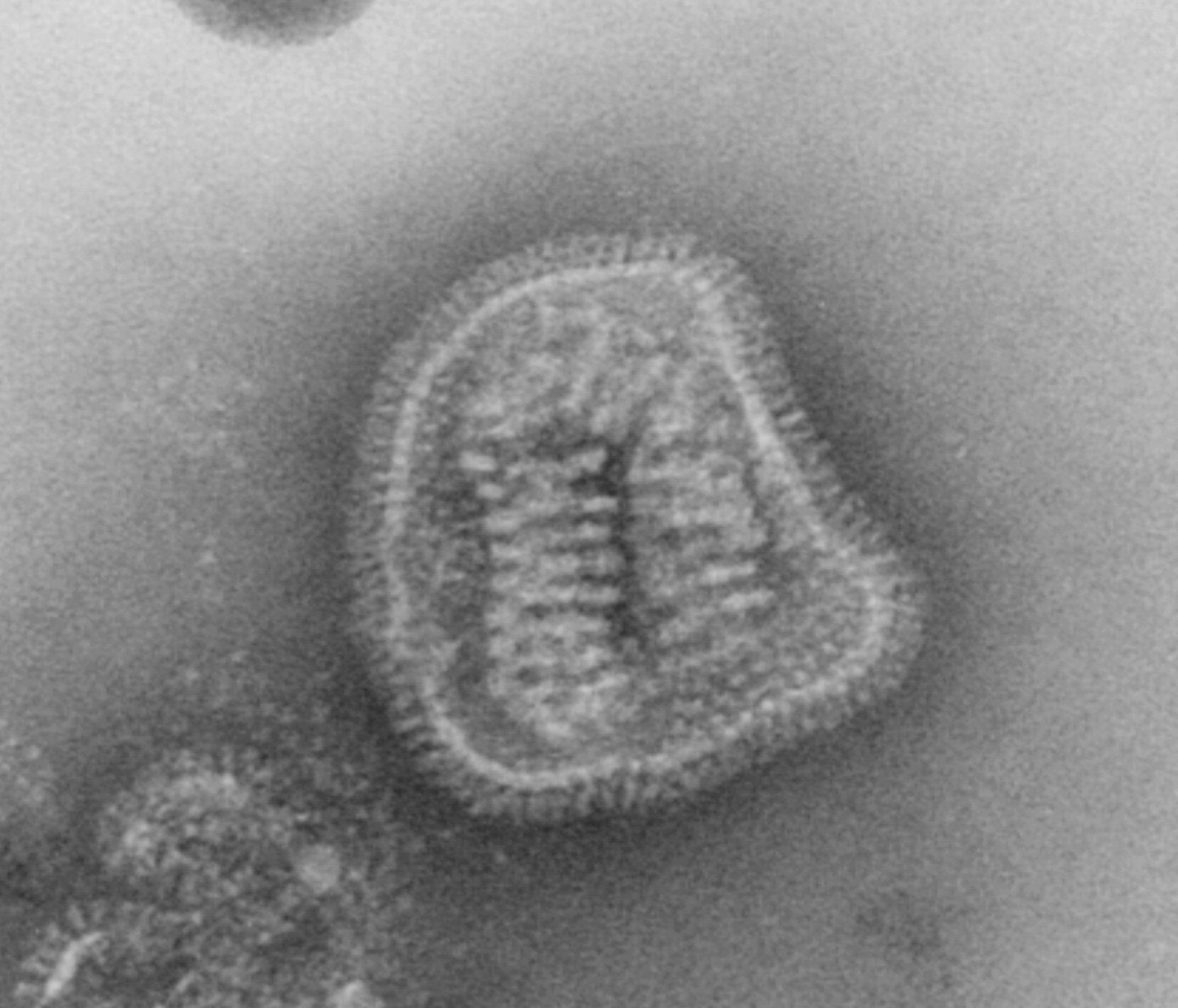
English: This negative-stained transmission electron micrograph (TEM) depicts the ultrastructural details of an influenza virus particle, or “virion”. A member of the taxonomic family Orthomyxoviridae, the influenza virus is a single-stranded RNA organism
The flu is a contagious respiratory illness caused by influenza viruses. It can cause mild to severe illness, and at times can lead to death. The best way to prevent this illness is by getting a flu vaccination each fall. Every year in the United States, on average: - 5% to 20% of the population gets the flu - more than 200,000 people are hospitalized from flu complications, and - about 36,000 people die from flu. Some people, such as older people, young children, and people with certain health conditions, are at high risk for serious flu complications. See PHIL 10073 for a colorized version of this image. Influenza A and B are the two types of influenza viruses that cause epidemic human disease. Influenza A viruses are further categorized into subtypes on the basis of two surface antigens: hemagglutinin and neuraminidase. Influenza B viruses are not categorized into subtypes. Since 1977, influenza A (H1N1) viruses, influenza A (H3N2) viruses, and influenza B viruses have been in global circulation. In 2001, influenza A (H1N2) viruses that probably emerged after genetic reassortment between human A (H3N2) and A (H1N1) viruses began circulating widely. Both influenza A and B viruses are further separated into groups on the basis of antigenic characteristics. New influenza virus variants result from frequent antigenic change (i.e., antigenic drift) resulting from point mutations that occur during viral replication. Influenza B viruses undergo antigenic drift less rapidly than influenza A viruses.Deutsch: Ein behülltes Virus aus der Gattung Influenzavirus in einer TEM-Aufnahme: Acht helikale Kapside werden von einer Virushülle umschlossen (Partikel ca. 80−120 nm im Durchmesser).
Français : Virus de la grippe en microscopie électronique.
Čeština: Virus chřipky pod elektronovým mikroskopem - na povrchu je patrná neuraminidáza a hemaglutinin.
Српски / srpski: Вирус грипа - велико увећање. |
||
| Kuupäev | |||
| Allikas |
|
||
| Autor |
|
||
| Luba (Faili edasikasutus) |
PD-USGov-HHS-CDC English: None - This image is in the public domain and thus free of any copyright restrictions. As a matter of courtesy we request that the content provider be credited and notified in any public or private usage of this image. |
||
| Teised versioonid |
|



Litsents

|
See pilt on Ameerika Ühendriikide Tervishoiu- ja Teenindusministeeriumi haldusalas oleva Haiguste Tõrje ja Ennetuse Keskuse teenistuja üles võetud või tehtud ametikohustuste täitmise ajal. Ameerika Ühendriikide keskvalitsuse teosena kuulub see pilt avalikku omandisse.
|
 |
Faili ajalugu
Klõpsa kuupäeva ja kellaaega, et näha sel ajahetkel kasutusel olnud failiversiooni.
| Kuupäev/kellaaeg | Pisipilt | Mõõtmed | Kasutaja | Kommentaar | |
|---|---|---|---|---|---|
| viimane | 19. november 2010, kell 09:45 | | 1663 × 1423 (763 KB) | wikimediacommons>Masur | original resolution |
Faili kasutus
Seda faili kasutab järgmine lehekülg:
